


Complete Guide to End Cap Welding Machine Selection for High Yield Production
A filter cartridge is only as reliable as its weakest seal. When a filter element leaks past its end cap in the field — allowing unfiltered fluid to bypass the membrane — the consequences range from compromised product quality to costly system shutdowns and customer complaints. In industrial filtration manufacturing, the end cap welding machine is the single most consequential piece of equipment on the production floor. It determines seal integrity, finished-product yield, and ultimately the reputation of every cartridge that leaves the facility.
Yet procurement decisions for filter cartridge end cap welding machines are often made on price alone, without a structured technical evaluation. The result: wire drawing on the weld surface, adhesive overflow, cold-weld failures, or a machine that cannot accommodate the full product range — problems that surface only after production is underway.
This guide identifies the 5 key technical parameters that should drive every end cap welding machine selection decision, covering drive systems, welding technology, size and material compatibility, production speed, and automation level. The goal is to give filter manufacturers — from first-time buyers to those upgrading an existing line — a clear, evidence-based framework for making the right choice.
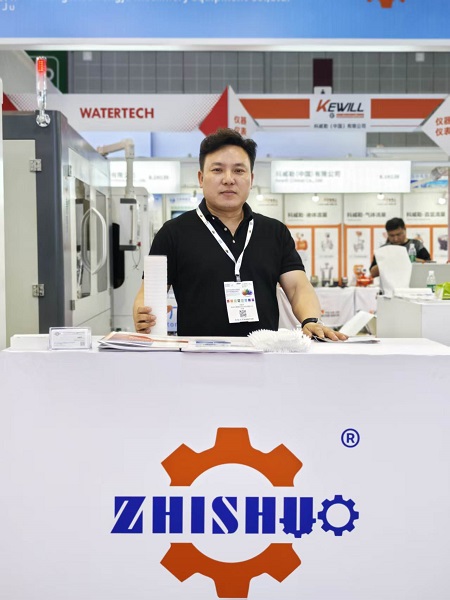
Leon Long, Founder of ZhiShuo Manufacture Factory
Specializes in complete filter manufacturing equipment and integrated production line solutions. With years of practical experience in filter production and equipment R&D, he believes technological innovation fuels the development of the filtration industry. This blog shares insights on equipment selection, practical production applications, customized non-standard line design and equipment maintenance. We develop reliable, high-efficiency machines to help filter manufacturers optimize processes and boost productivity.
The drive system — pneumatic or servo — is the primary factor governing seal precision, repeatability, and total cost of ownership.
Welding technology (hot plate vs. infrared) must be matched to the thermoplastic material and end cap geometry being processed.
Compatible filter size and material range defines which machine series or configuration the production line requires — getting this wrong means costly re-tooling.
Cycle time and station count determine daily output capacity; double-station configurations can nearly double effective throughput at modest additional cost.
Automation level and control intelligence — from basic semi-automatic to fully automatic smart-factory systems — directly determines labor cost per unit and long-run quality consistency.
What Is a Filter Cartridge End Cap Welding Machine?
A filter cartridge end cap welding machine is a purpose-built piece of industrial equipment that permanently fuses plastic end caps onto both ends of a filter element through thermal fusion — with no adhesives, potting compounds, or mechanical fasteners required. The machine heats the mating surfaces of the end cap and filter media to their thermoplastic melt point, then presses them together under precisely controlled force. Once cooled and solidified, the joint is a single-material bond that typically exceeds the structural strength of the surrounding base materials.
This adhesive-free approach eliminates the most common failure modes of older capping methods: glue voids, chemical incompatibility between the adhesive and the process fluid, uneven application, and extended cure times that slow throughput. A well-specified end cap welding machine delivers zero-leakage sealing at production rates of 2–6 pieces per minute, depending on the machine configuration and filter size.
Hot plate welding — the dominant technology in end cap welding equipment — was first developed in the 1930s and is now a mature, widely standardized joining method for thermoplastics, with guidelines published by organizations including the German DVS, the American Welding Society (AWS), and the Comité Européen de Normalisation (CEN). Its adoption in filter manufacturing reflects its consistent joint quality and broad compatibility with common filter plastics.
The process is applied across water treatment (reverse osmosis pre-filtration, industrial process water), pharmaceutical and biological filtration, food and beverage processing (mineral water, juice, wine), chemical and ink filtration, petroleum oilfield water injection, and industrial dust collection. In every sector, the integrity of the end cap seal is non-negotiable.
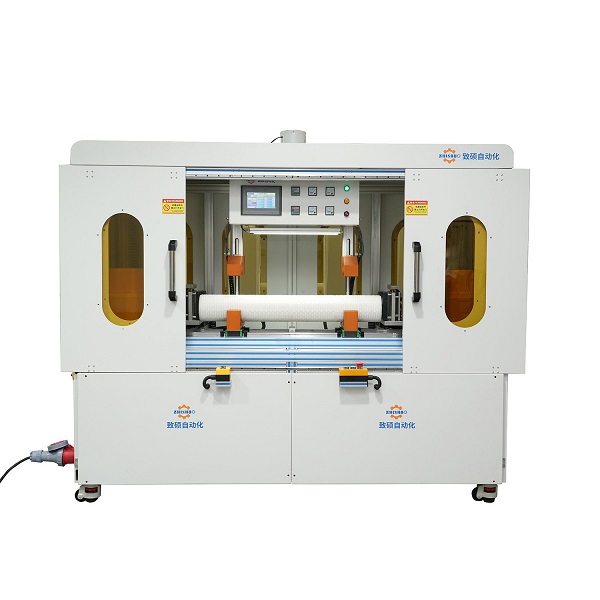
5 Key Technical Parameters to Evaluate When Selecting an End Cap Welding Machine
Not all end cap welding machines perform equally. The following parameters form a structured evaluation framework — one that separates machines capable of sustained high-yield production from those that will introduce defects, bottlenecks, and rework costs.
Drive System: Pneumatic vs. Servo
The drive system governs how the pressing mechanism moves — and it is the most fundamental technical decision when selecting a filter end cap welding machine. Two drive architectures dominate the market.
Pneumatic drive uses compressed air and cylinder actuation to move the welding head. These systems are mechanically straightforward, cost-effective to purchase and operate, and reliable in standard manufacturing environments. For facilities producing consistent, single-material filter cartridges within a fixed size range, a pneumatic end cap welding machine delivers robust production performance at the lowest entry cost. The inherent trade-off is that position control depends on air pressure regulators and mechanical stops — offering limited programmability over speed ramp-up, dwell force, and changeover distance.
Servo drive replaces the air cylinder with a closed-loop electric servo motor linked to a precision encoder. The feedback loop allows the machine to control pressing distance, force profile, and speed with far greater resolution and repeatability. Industry testing on plastic welding applications demonstrates that servo-controlled systems achieve position repeatability more than 3× better than equivalent pneumatic systems — with standard deviations as low as ±3 µm for servo versus ±12 µm for pneumatic actuation. Detailed servo vs. pneumatic performance data in plastic welding applications is documented by Plastics Technology.
| Comparison Factor | Pneumatic Drive | Servo Drive |
|---|---|---|
| Position Repeatability | ±0.1–0.3 mm | ±0.01–0.05 mm |
| Initial Equipment Cost | Lower baseline | Approx. 25–40% higher |
| Force/Speed Programmability | Limited (pressure regulator) | Fully programmable profiles |
| Ongoing Maintenance | Requires air supply system; filter, regulator, oiler maintenance | No air infrastructure; simpler long-term |
| Multi-product Flexibility | Manual adjustment per product | Stored recipe switching (one-key) |
| Best Suited For | Standard production, budget-sensitive buyers, consistent product range | High-precision, premium, pharma/food-grade, or high-mix production |
Welding Technology: Hot Plate vs. Infrared
The welding technology determines how the machine delivers heat to the end cap and filter media mating surfaces. Two primary methods are used in modern filter cartridge end cap welding machines: contact hot plate welding and infrared (non-contact) welding.
Contact hot plate welding is the industry-standard process. According to published welding standards, contact hot plate welding operates at temperatures typically 30–100°C above the material's melt point — in practice, within a working range of approximately 180°C to 350°C for the thermoplastics used in filter production. The heated platen is pressed directly against the mating surfaces until they reach melt temperature, then withdrawn in a rapid "changeover phase" before the parts are pressed together under controlled welding force. The hot plate welding process is divided into four distinct phases: matching, heating, changeover, and welding/forging — each with defined pressure and time parameters that govern joint quality. Learn about hot plate welding process design and key quality parameters.
Hot plate technology delivers consistent, deep-fusion bonds and is compatible with virtually all common filter plastics: PP, PES, PMMA, PTFE, PE, ABS, and nylon. The primary quality control lever is PID temperature control — a closed-loop controller that maintains the platen surface within ±2–5°C of the set point across production cycles, preventing cold welds (under-temperature) and material degradation (over-temperature). A comprehensive overview of thermoplastic welding methods and material suitability is available here.
Infrared (non-contact) welding achieves the same surface melting through radiant heat without physical contact between the heating element and the thermoplastic surface. This eliminates the risk of material adhesion to the platen — a relevant advantage for glass-fiber-reinforced materials or plastics with very low flow-point temperatures. The trade-off is greater system complexity and higher equipment cost. In mainstream filter cartridge production, hot plate technology dominates due to its proven reliability, ease of parameter adjustment, and straightforward maintenance.
Compatible Filter Size and Material Range
Before evaluating any end cap welding machine price or throughput specification, manufacturers must precisely define their product range: which filter sizes are currently in production, which materials are in use, and what may be added within the next 3–5 years. These factors define the machine series required — and overlooking them is the most common and most costly mistake in equipment procurement.
Filter cartridges are divided into two broad size categories for equipment selection:
Small-flow (standard) filters: 10–20 inch cartridges used in residential, commercial, and light industrial water filtration — the largest global volume segment by unit count.
Large-flow (high-flow) filters: Cartridges from 20 to 60 inches, used in high-capacity systems including chemical processing, power generation cooling, and large-scale municipal water treatment.
Material compatibility is equally critical. The machine's heating system and tooling must match the thermoplastic being processed. Melt points vary significantly across common filter materials, and a machine with insufficient temperature range or incorrect tooling geometry will produce flawed welds regardless of other specifications. For a thorough guide on filter cartridge end cap configurations — including DOE, SOE, finned, and custom types — and their sealing requirements, this resource provides practical reference.
| Material | Approx. Melt Point | Typical Filter Applications |
|---|---|---|
| PP (Polypropylene) | 130–165°C | Water treatment, food & beverage |
| PE (Polyethylene) | 120–140°C | General industrial, chemical |
| PES (Polyethersulfone) | 220–230°C | Pharmaceutical, high-temperature filtration |
| PTFE | ~327°C | Aggressive chemical solvents, high-purity gas |
| PMMA (Acrylic) | 160–260°C | Medical, high-clarity housing assemblies |
| Nylon (PA) | 180–260°C | Industrial, automotive, process filtration |
| ABS | 200–240°C | Electronics, industrial housings |
Production Speed and Cycle Time Per Piece
Production speed determines how many finished filter cartridges an end cap welding machine can seal in a standard shift — and whether that machine will support current demand or become a bottleneck as order volumes grow.
For hot plate end cap welding, cycle time covers four sequential phases: loading, heating (30–100°C above melt point applied to both surfaces), changeover (rapid platen withdrawal, typically 2–3 seconds to minimize surface cooling), and pressing/cooling. A well-specified pneumatic single-station machine processes approximately one piece every 30–45 seconds. At a 35-second average cycle, that equates to approximately 822 pieces per 8-hour shift under continuous operation — before accounting for material changeovers, operator breaks, and setup time.
Several machine design factors directly affect achievable daily output:
Single vs. double station: A double-station design allows one station to load/unload while the other completes its heat-and-press cycle, effectively cutting the production-time impact of non-welding steps. This configuration can increase effective shift output by 60–100% compared to a single-station equivalent.
Heating power (kW): Higher rated heating power reduces preheat time and maintains stable platen temperature during continuous production. Machines optimized for large-flow, high-mass filter elements require correspondingly higher power ratings — typically 10–11 kW — compared to 6–8 kW for small-flow single-station units.
Changeover efficiency: For multi-product lines, the speed and precision of length adjustment and mold tooling changeover has a significant impact on effective daily output across a full production calendar.
| Machine Configuration | Typical Cycle Time | Est. Output / 8-Hour Shift |
|---|---|---|
| Single Station, Pneumatic | 30–45 sec/piece | 640–960 pcs |
| Double Station, Pneumatic | 15–25 sec effective/piece | 1,150–1,920 pcs |
| Double Station, Servo (Advanced) | 12–20 sec effective/piece | 1,440–2,400 pcs |
| Fully Automatic Smart Series | 10–15 sec effective/piece | 1,920–2,880 pcs |
Automation Level and Intelligent Control System
The fifth parameter captures how much of the welding process — from loading to quality verification — is handled automatically, and how intelligently the machine manages parameter consistency across long production runs. This dimension has the greatest long-term impact on labor cost per unit and quality consistency at scale.
In practice, end cap welding machines operate across four levels of automation:
Semi-automatic (manual loading): The operator places each filter element and end cap, initiates the welding cycle, and removes the finished piece. Lowest capital cost; highest labor dependency per unit produced.
Semi-automatic with recipe memory: The machine stores named parameter sets (temperature, time, pressing force, distance) as product recipes. Operators select a recipe when changing products, reducing setup errors and changeover time significantly.
Automatic loading/unloading: Integrated conveyors or robotic handling manage loading and unloading. The operator performs quality inspection and material replenishment only.
Fully automatic / Smart factory integration: CNC mold alignment, PLC-controlled welding sequences, integrated quality verification, digital data logging for production traceability, and remote system monitoring. Designed for high-volume, regulated-environment production (pharmaceutical, food-grade, electronics).
Two control technologies are the quality backbone of any reliable automated end cap welding machine:
PID temperature control: Maintains the welding platen at a precise set-point temperature by correcting in real time for heat loss during the production cycle. This prevents "cold weld" defects — incomplete molecular diffusion at the joint interface — which cause end cap delamination under operating pressure in the field. The PID controller's role in hot plate welding temperature management is well-established in thermoplastics joining literature, and it is now considered a baseline requirement for any production-grade machine.
CNC mold alignment: Numerically controlled tooling positioning ensures the end cap seats squarely and concentrically on the filter element in every cycle — eliminating the tilt and misalignment defects that cause bypass leakage in manually loaded machines.
Together, these control systems enable the industry benchmark of a finished product yield rate above 99.5% — the threshold that separates high-efficiency filter production from scrap-heavy operations where rework costs quietly erode margin.
Technical Specifications: Two Reference Models at a Glance
The table below presents verified technical parameters for two representative filter cartridge end cap welding machines from ZHISHUO's product range — an economical large-flow pneumatic unit for high-flow filter production and an economical small-flow single-station model for standard 10–20 inch cartridges. Both represent the entry tier in their respective size categories; servo-driven standard, advanced, and fully automatic configurations are also available for higher-precision and higher-throughput requirements.
| Parameter | Large Flow Pneumatic (Model ZS-DRJ158) | Small Flow Pneumatic Single Station (Model ZS-SGW166-10) |
|---|---|---|
| Drive Type | Pneumatic cylinder | Pneumatic cylinder |
| Rated Power | 10.7 kW | 6.8 kW |
| Voltage | 220V / 380V, 50/60 Hz | 220V / 380V, 50/60 Hz |
| Air Pressure Required | 6 kg/cm² | 6 kg/cm² |
| Temperature Range | Room temperature – 350°C | Room temperature – 350°C |
| Compatible Materials | PP, PES, PMMA, etc. | PP, PES, PMMA, PTFE, etc. |
| Welding Cycle Time | 35–45 sec/piece | 30–40 sec/piece |
| Compatible Filter Length | Up to 40 inches (100 mm adjustable increment) | 10–20 inches |
| Machine Dimensions (L×W×H) | 2,400 × 1,050 × 1,850 mm | 2,200 × 1,050 × 1,850 mm |
| Machine Weight | ~680 kg | ~600 kg |
| Station Configuration | Single station | Single station |
| Certification | CE, ISO compliant | CE, ISO compliant |
Quick Selection Matrix: Matching Requirements to the Right Configuration
With the five parameters defined, the following matrix maps common production scenarios to the appropriate end cap welding machine configuration. This serves as a starting point; buyers should confirm details directly with the equipment manufacturer, particularly for non-standard product requirements.
| Production Scenario | Recommended Configuration |
|---|---|
| First production line, standard PP/PE cartridges, 10–20 inch, budget-conscious | Small Flow Pneumatic Single Station (Economical) |
| Medium volume, mixed 10–20 inch product range, growing throughput needs | Small Flow Pneumatic Double Station (Standard) |
| High-precision, pharma or food-grade, or high-SKU product mix, 10–20 inch | Small Flow Servo Double Station (Advanced) |
| High-flow industrial filters, 20–40 inch length | Large Flow Pneumatic or Servo Series |
| High-volume automated line with minimal operator labor | Fully Automatic Smart Series |
| Non-standard filter geometries, custom end cap designs, proprietary materials | OEM / Custom Configuration — direct consultation required |
Looking for a Reliable Filter Cartridge End Cap Welding Machine Manufacturer?
ZHISHUO (Changzhou Zhishuo Automation Equipment Co., Ltd.) is a specialized filter cartridge end cap welding machine manufacturer based in Changzhou, China. With 15+ in-house production lines, annual capacity exceeding 300 units, 40+ global co-branding partners, and 800+ successful customized samples, ZHISHUO serves filter manufacturers across water treatment, pharma, food & beverage, and industrial markets. CE and ISO certified. Full OEM/ODM capability. Direct factory pricing. 24-hour response.
Send Inquiry NowView Full Product Range →Conclusion
Selecting a filter cartridge end cap welding machine is a multi-dimensional decision. Drive system, welding technology, filter size and material compatibility, cycle time, and automation level all interact to determine whether an investment supports high-yield, consistent-quality production — or introduces defects, bottlenecks, and rework that quietly erode profitability.
Evaluating these five parameters in sequence — before comparing prices or negotiating delivery terms — gives procurement teams a structured basis for narrowing a broad equipment market into the specific configuration that fits real production requirements. For manufacturers serious about achieving a finished product yield rate above 99.5% and reducing their dependence on manual labor, the correctly specified end cap welding machine is consistently one of the highest-ROI investments on the production floor.
Filter manufacturers seeking a proven filter cartridge end cap welding machine manufacturer — with genuine engineering depth, CE/ISO certification, and flexible OEM/ODM customization — will find that ZHISHUO's full series, from economical pneumatic single-station units to fully automatic smart-series systems, covers the complete spectrum of production requirements. Factory-direct sourcing, lifetime after-sales support, and a track record of 800+ successful custom projects make ZHISHUO a credible partner for procurement teams looking to buy an end cap welding machine with confidence.


