


Knife Paper Pleating Machine Reviews and Performance Guide
Knife paper pleating machines fold filter media into uniform pleats that directly determine filter performance in water treatment and bio-pharmaceutical production. Consistent creasing ensures proper flow rates and filtration efficiency. Manufacturers often ask which knife paper pleating machine delivers the best results for their specific production volume. This guide reviews top models using three criteria: speed, precision, and material compatibility. High-volume operations demand different features than precision-focused medical filter production. The analysis covers servo-driven accuracy, tension control systems, and multi-layer processing capabilities, with a detailed review of the ZHISHUO Knife Type Paper Folding Machine alongside other paper folding machines available in the global market.
Key Takeaways
Speed and precision both matter when choosing a knife pleating machine; the right balance depends on the application.
Servo-driven machines produce accurate folds for delicate filter media.
Tension control systems keep media feeding evenly to avoid tears.
Industrial machines commonly run from 50 to 500 pleats per minute; specialized high-speed models are rated higher for large-volume lines.
Precision models hold tight tolerances for medical and bio-pharmaceutical filters.
The ZHISHUO machine offers servo-driven accuracy and handles up to 7 layers.
Check CE and ISO certifications to ensure safety and global market access.
Strong after-sales support and spare parts reduce downtime and protect your investment.
Key Criteria for Evaluating Knife Pleating Machines
Speed and Production Capacity
Production speed determines throughput and return on investment. Industrial paper pleating machines generally run from 50 to 500 pleats per minute, and pricing typically correlates with this speed range. A standard model may offer 0–220 pleats per minute with variable frequency control, while a deep pleat model runs 0–150 pleats per minute in a low-speed stable mode. Higher speeds suit high-volume filter production for automotive, HVAC, and industrial sectors. Slower, stable modes favor delicate media where fold quality matters more than raw output. The table below compares typical speed tiers.
| Machine Type | Typical Speed Range | Best Suited For |
|---|---|---|
| Standard knife pleater (variable frequency) | 0–220 pleats/min | General industrial filter production |
| Deep pleat / low-speed stable mode | 0–150 pleats/min | Delicate media and precision folding |
| Rotary skip pleater | Up to 400 pleats/min (per manufacturer) | High-volume standard media |
| Intelligent blade pleater | Up to 300 pleats/min (per manufacturer) | Automated high-output lines |
| Specialized rotary pleater | Up to 3,000 pleats/min (per manufacturer) | Specialized high-speed applications |
Material Width Capabilities
Width capacity limits the size of filter elements a machine can produce. A maximum filter media width of 1250mm supports large-scale production of wide filter panels. Narrower machines restrict output to smaller cartridges. Buyers should match width capacity to their largest planned filter size. This single technical specification often decides whether a machine fits an existing production line.
Precision and Fold Consistency
Servo-driven accuracy. Servo technology replaces traditional cam structures with toothed synchronous belts. This design eliminates the empty return stroke and supports various folding heights. Under a 5mm folding height condition, crease height adjustment precision can reach 0.2mm, according to the manufacturer. Such accuracy ensures consistent fold quality across a production run. Servo-driven upper and lower folding knives deliver mechanical precision that manual systems cannot match.
Tension control systems. Closed-loop constant tension control keeps media feeding evenly. Uneven tension causes inconsistent pleat heights and widths, which compromise filter performance. A web-guiding system combined with electronic gear synchronization maintains alignment. These systems allow adjustable pleat heights from 5 to 50mm. Stable tension also prevents tearing during the creasing, perforating, and cutting stages.
Material Versatility and Durability
Versatility separates capable machines from limited ones. Industrial knife pleating machines handle filter paper, non-woven, metal mesh, and multi-layer composites. Layer capacity typically ranges from 1 to 5 layers for general-purpose machines, while higher-capability units fold up to 7 layers, including metal wire mesh. Machines limited to single-layer paper cannot serve these markets.
Durability affects long-term cost. Replacement frequency for well-built knife pleating machines runs 5 to 10 years under normal duty, while simpler paper folding machines last 2 to 4 years. Robust construction and accessible spare parts lower total ownership cost. Buyers should review build materials and service support before purchase.
Reviews of Top Knife Pleating Machines
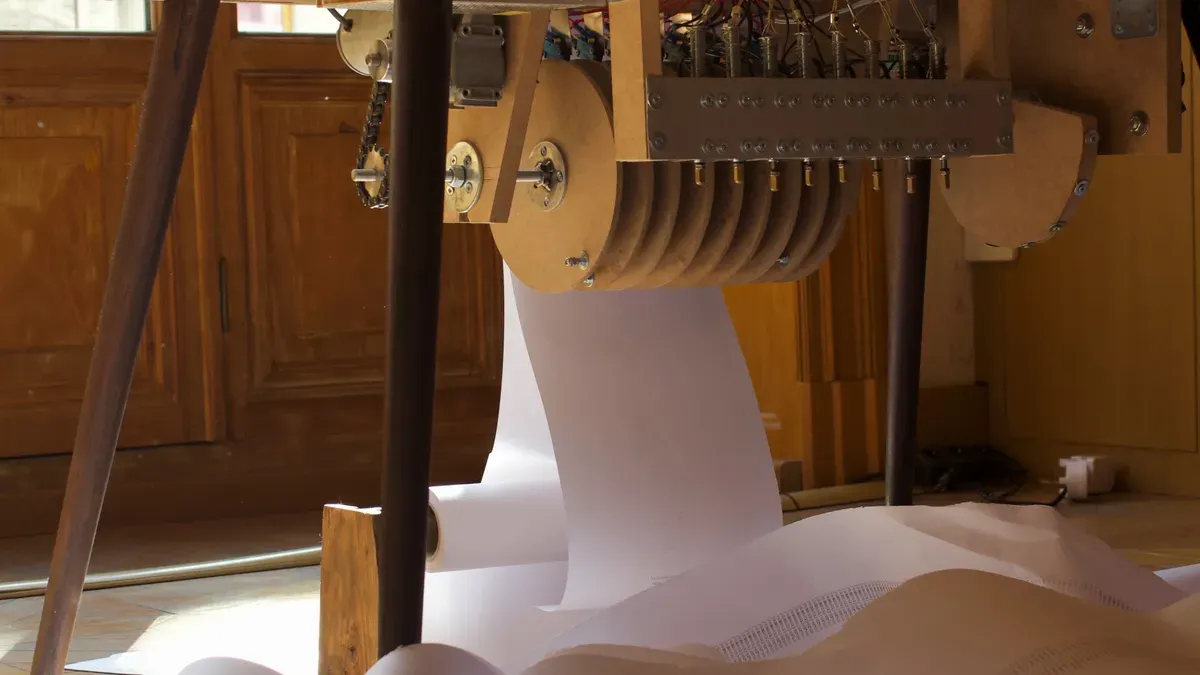
The global market offers several capable models, each targeting different production priorities. A review of top knife pleating machines reveals distinct tiers based on automation, speed, and material handling. Buyers can group these machines into two broad categories: high-speed industrial models built for volume, and precision-focused units designed for delicate or medically critical media.
High-Speed Industrial Models
High-speed models prioritize throughput. A used rotary skip pleater is rated up to 400 pleats per minute, and a next-generation intelligent blade pleater up to 300 pleats per minute, per manufacturer data. A specialized rotary pleater is rated at up to 3,000 pleats per minute for specific applications. These speeds suit automotive filter lines and HVAC production where daily output targets are aggressive.
In one reported case, a mid-sized automotive filter manufacturer replaced older semi-automatic machines with a fully automated CNC knife paper pleating machine running at 100 pleats per minute and recorded a 40 percent increase in daily output and a 15 percent reduction in material waste. The example shows that industrial-grade performance depends on matching speed to the application rather than simply choosing the fastest number.
Automation and Integration Features
Automation separates entry-level units from true industrial pleating machines. Three tiers exist. Semi-automated models handle feeding and basic pleating but require manual adjustment of pleat depth. Fully automated systems provide continuous feed, pleat, and stacking with sensors for consistent output. CNC-controlled machines add digital control over pleat height, speed, and pattern for maximum reproducibility. A high-quality full-auto high-speed CNC knife paper pleating machine often includes PLC controllers and fully automated feeding. These features reduce operator involvement and minimize human error during long production runs.
Precision-Focused Models
Precision models serve chemical, bio-pharmaceutical, and fine filtration markets. Uniform pleat dimensions directly affect filter efficiency and flow characteristics. Filters rated to high-efficiency particulate air (HEPA) standards demand especially tight fold control, because pleat geometry determines usable media area and pressure drop. A filter knife pleating machine used in these sectors must hold tight tolerances across every fold. Adjustable pleat height on precision units typically ranges from 3 to 150mm, with some models offering 3 to 70mm for specialized work. For medical filter production, a single uneven crease can compromise the entire cartridge.
Handling Delicate Media
Delicate media demands gentle transport and controlled tension. PTFE composite membranes and thin non-wovens tear easily under excessive pull. Precision-focused paper folding and pleating machines use servo constant tension feeding to prevent damage. Heating power and operating temperature, sometimes up to 200 to 300 degrees Celsius, help set the pleat shape without stressing the material. The best units in this class balance slow, stable operation with the ability to process multi-layer composites without delamination.
ZHISHUO Knife Type Paper Folding Machine Review
The Knife Type Paper Folding Machine from ZHISHUO uses fully servo-driven synchronous transmission. Upper and lower folding knives operate independently for mechanical precision. A closed-loop constant tension control system maintains even media feed. A web-guiding system and electronic gear synchronization keep the material aligned through every stage. The machine handles a maximum filter media width of 1250mm and pleat heights from 5 to 50mm. It processes PP melt-blown non-wovens, PTFE composite membranes, and metal wire mesh without damage, and folds up to 7 layers simultaneously. A strict preheating, folding, and shaping sequence sets the pleat without introducing stress. PLC systems synchronize temperature, speed, and pressure throughout the cycle.
| Parameter | ZHISHUO Knife Type Paper Folding Machine |
|---|---|
| Driving System | Fully servo-driven synchronous transmission |
| Max Media Width | 1250 mm |
| Pleat Height Range | 5–50 mm |
| Crease Adjustment Precision | 0.2 mm (at 5 mm folding height, per manufacturer) |
| Layer Capacity | Up to 7 layers, including metal wire mesh |
| Media Compatibility | PP melt-blown non-wovens, PTFE composite membranes, metal wire mesh |
| Control | PLC synchronization of temperature, speed, and pressure |
Integrated production line capabilities matter as much as single-machine performance. PLC systems synchronize temperature, speed, and pressure throughout the cycle, supporting coordinated operation across the filter production line. Automated controls reduce downtime and maintenance compared with manual operation. For buyers comparing knife pleating machines, these features address the core needs of paper pleating: consistent creasing, reliable performance, and low maintenance.
Performance Comparison: Speed vs. Precision

Speed and precision rarely peak together. High-speed models push output toward 300 to 3,000 pleats per minute, yet they may sacrifice fold uniformity on delicate media. Precision-focused units run slower but hold tight tolerances across every crease. The best knife paper pleating machine balances these demands according to the application. A filter manufacturer producing automotive cartridges prioritizes throughput; a bio-pharmaceutical producer prioritizes consistent pleat geometry. Buyers should map their output targets against acceptable tolerance ranges before selecting a model. The ZHISHUO machine maintains pleat heights from 5 to 50mm while delivering stable, precise folding, a middle ground that suits many industrial paper pleating operations. Real-world performance depends less on peak speed and more on how consistently a machine holds its settings across a full shift.
Automation and Ease of Use
User Interface and Setup
Modern paper folding machines increasingly rely on automated controls. PLC systems synchronize temperature, speed, and pressure to maintain consistent pleating. Automated controls reduce operator involvement and support repeatable output. Buyers should verify that setup and changeover procedures match their production mix. Setup becomes a matter of confirming machine parameters rather than manual recalibration.
Maintenance Requirements
Routine maintenance protects fold quality and extends machine life. Tasks include cleaning rollers and knives, checking blade wear, and calibrating roller alignment. Common problems have straightforward solutions. Uneven pleats usually trace to loose tension or dirty rollers; adjusting tension and cleaning rollers restores uniformity. Wrinkles appear when pressure or speed runs too high; reducing speed and lowering pressure resolves the issue. A machine jam often means media fragments stuck in the knife; stopping the machine, cleaning the knife, and restarting clears the blockage.
Cost of Ownership and Value
Initial Investment vs. Long-Term Costs
Purchase prices for knife-type paper folding machines vary widely. As a general market range, knife pleating machines cost roughly between $20,000 and $70,000, while simpler filter paper machines range from about $5,000 to $15,000. Durability shapes long-term value. Well-built knife pleating machines last 5 to 10 years, while simpler paper folding machines last 2 to 4 years. A lower purchase price means little if the machine needs frequent replacement. Buyers should weigh upfront cost against expected service life and maintenance demands.
| Category | Typical Price Range | Typical Service Life |
|---|---|---|
| Knife-type paper folding machine | USD 20,000–70,000 | 5–10 years |
| Simpler filter paper machine | USD 5,000–15,000 | 2–4 years |
Spare Parts and Service
After-sales support directly affects total ownership cost. Automated controls reduce downtime and maintenance compared with manual operation, lowering labor hours for routine service. Buyers should confirm parts availability and service response times before purchase. Strong after-sales support turns a machine purchase into a long-term production asset.
How to Choose the Right Paper Pleating Machine
Matching Specs to Production Needs
Selecting the right equipment starts with defining production requirements. Manufacturers should estimate daily output, filter dimensions, and media type before comparing models. This step determines whether a manual, semi-automatic, or fully automatic system fits the operation. Buyers can calculate required pleats per minute by dividing daily output by operating hours, then dividing by pleats per filter. This simple math prevents overbuying or underbuying.
The following steps guide the selection process:
Define production requirements by estimating daily output, filter dimensions, and media type.
Set a realistic budget that includes machine cost, shipping, installation, spare parts, and technician fees.
Verify compatibility with existing filter media and framing tools, and request sample testing.
Evaluate build quality by inspecting frames, precision-machined components, and reputable motors.
Assess after-sales support, including warranty, replacement part availability, and service options.
Avoid red flags such as no documentation, vague capacity claims, or unrealistically low prices.
Scalability Options
Growth planning matters as much as current needs. Semi-auto lines are often upgradeable, allowing manufacturers to start small and automate progressively as business scales. Buyers should verify the machine handles current fold types and paper sizes while accounting for future variations. Machine speed and volume capacity must match production needs to avoid delays as output grows. Paper thickness compatibility should cover the range of materials used today and potential future substrates. Long-term ROI often favors higher-priced machines with advanced features, increased durability, and faster folding rates that support scalability.
The Importance of Manufacturer Certifications
Understanding CE and ISO Standards
Certifications signal compliance with international quality and safety requirements. CE marking indicates a product meets European health, safety, and environmental protection standards under the European Union's conformity framework. ISO 9001 covers quality management systems, while ISO 14001 addresses environmental management. For air filtration equipment, filter elements are also commonly rated under classification systems such as ISO 16890 for particulate efficiency. These certifications matter for global market entry. Manufacturers exporting to Europe, America, or Southeast Asia need equipment that meets these benchmarks. A paper pleating machine without proper certification may face import delays or rejection at customs.
Safety and Compliance
Safety compliance protects operators and reduces liability. Certified equipment undergoes testing for electrical safety, mechanical hazards, and environmental impact. Buyers should request certification documents before purchase; reputable suppliers provide these records without hesitation. For industries like bio-pharmaceuticals and water treatment, compliance with recognized standards is non-negotiable.
Evaluating After-Sales Support
Technical Training and Support
Strong after-sales support determines long-term success. Manufacturers should provide comprehensive training for operators and maintenance staff, covering setup, operation, troubleshooting, and routine maintenance. Remote support options add convenience for international buyers. A supplier with global export experience understands the challenges of cross-border service. Buyers should treat comprehensive support as a benchmark for reliability in the industrial pleating machine market.
Global Service Networks
Access to spare parts and service technicians affects uptime. Buyers should confirm parts availability and response times before purchase. A paper creasing machine that sits idle waiting for a replacement component costs money. Suppliers with established global networks can ship parts quickly and provide on-site or remote assistance. A high-volume operation cannot afford extended downtime, making service network strength a critical selection factor.
Summary
Speed, precision, and versatility define a top-tier knife paper pleating machine. Buyers must weigh these factors against their production goals. A high-volume operation benefits from maximum output; medical filter work demands uniform fold geometry. No single model fits every plant. Consider certifications and after-sales support before purchase: CE and ISO marks prove compliance with international standards, and strong service networks reduce downtime and protect long-term investment. The ZHISHUO machine stands out with its fully servo-driven synchronous transmission, closed-loop tension control, 1250mm media width, and 7-layer folding capability, making it a strong contender for manufacturers seeking reliable knife pleating equipment.
Looking for a Reliable Knife Paper Pleating Machine?
ZHISHUO (Changzhou Zhishuo Automation Equipment Co., Ltd.) designs and manufactures the Knife Type Paper Folding Machine with 1250mm media width, 5–50mm pleat heights, up to 7-layer folding, and servo-driven precision. Buyers can request a quotation, sample testing, or certification documents (CE / ISO 9001 / ISO 14001) before ordering.
Send an Inquiry to ZHISHUOView the Knife Type Paper Folding Machine →FAQ
Industrial paper pleating machines generally run from 50 to 500 pleats per minute. Some high-speed models in the broader market are rated at 300 to 3,000 pleats per minute, but slower speeds protect delicate media. The ZHISHUO machine uses fully servo-driven synchronous transmission for stable, precise folding.
The machine handles PP melt-blown non-wovens, PTFE composite membranes, and metal wire mesh. It processes multi-layer composites with up to 7 simultaneous layers. Servo-driven tension control prevents tearing of delicate media during transport.
The machine adjusts pleat heights from 5 to 50mm and supports media widths up to 1250mm. Servo-driven upper and lower folding knives maintain precise crease dimensions within this range, and PLC systems synchronize temperature, speed, and pressure throughout the cycle.
Water treatment, chemical, and bio-pharmaceutical industries rely on this equipment. Uniform pleats directly affect filter performance and flow rates. Medical filter production demands tight tolerances that servo-driven knife machines provide.
Routine cleaning of rollers and knives keeps fold quality consistent. Operators should check blade wear and replace blades as needed, and calibrate roller alignment and tension systems. Proper maintenance extends machine life to 5–10 years under normal duty.
CE marking verifies compliance with European safety and environmental standards. ISO 9001 covers quality management, and ISO 14001 addresses environmental practices. Buyers should look for these certifications when selecting equipment for global markets.
Knife pleating handles up to 7 layers including metal wire mesh. Rotary pleaters achieve faster speeds on standard media, but knife machines offer greater versatility for multi-layer composites and delicate materials.
Customization options should be confirmed with the manufacturer. Buyers provide product details and specific requirements to determine feasibility and lead times.
References and Image Credits
ISO 16890-1:2016, Air filters for general ventilation — classification system (ePM) — International Organization for Standardization: https://www.iso.org/obp/ui/#iso:std:iso:16890:-1
HEPA filter technology — Wikipedia: https://en.wikipedia.org/wiki/HEPA
CE marking — European Commission: https://single-market-economy.ec.europa.eu/single-market/ce-marking_en
Images — Unsplash: https://unsplash.com; Pexels: https://pexels.com
Note: speed ratings of third-party machines (400 / 300 / 3,000 pleats per minute) are as published by each manufacturer and should be verified before comparison; the 40% output / 15% waste figures come from a reported customer case; price ranges (USD 20,000–70,000 / USD 5,000–15,000) and service-life figures are general market estimates, not quotations; the 0.2mm crease precision and 7-layer capacity are manufacturer-published specifications for the ZHISHUO machine.


