


What Media Types Can a Filter Media Pleating Machine Handle?
A filter pleating machine handles synthetic, fiberglass, cellulose, metal, and specialty media. Learn how each type performs and what to consider.
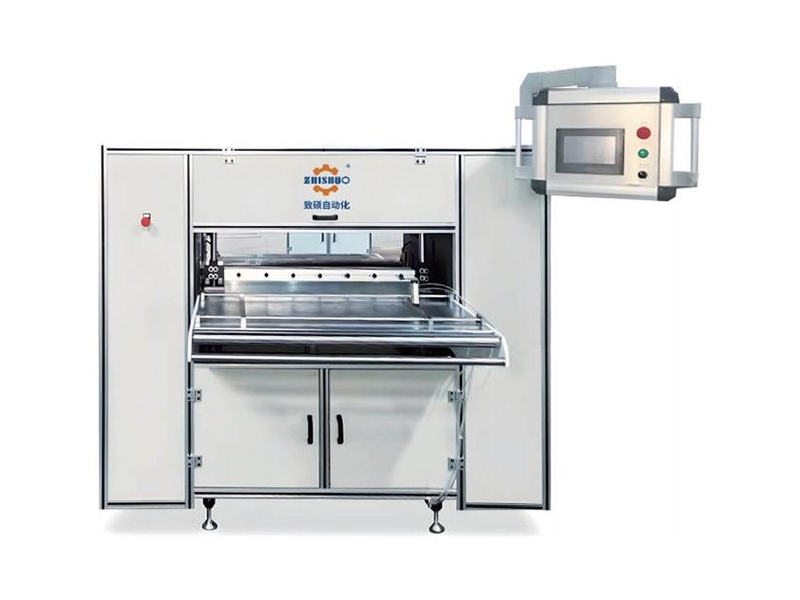
A filter media pleating machine works across five broad media families: synthetic nonwovens, fiberglass, cellulose and paper, metal, and specialty composites. Each family covers dozens of grades, and each grade behaves differently once the web reaches the folding line. A machine that runs a standard HVAC paper without trouble may need different blades, a different tension profile, and a different heat curve before it can run a stainless mesh or a laminated PTFE membrane.
Capability depends on thickness, stiffness, and pleat geometry far more than on the category label. A 0.3 mm melt-blown web and a 0.8 mm stainless mesh both pleat successfully, yet they demand different blade angles, different tension ceilings, and different heat settings. Buyers who compare categories alone often misjudge what a machine can actually run, and they discover the gap only after the first production roll is on the floor.
This article examines each media type in turn, the handling factors that decide compatibility, the capability envelope of a knife-type pleating line, and the checks that turn a datasheet into a repeatable production recipe.
Key Takeaways
A filter pleating machine handles five main media types: synthetic, fiberglass, cellulose, metal, and specialty.
Media thickness, stiffness, and pleat geometry matter more than the category alone.
Synthetic media such as polyester and polypropylene are the most common grades and need heat and static control.
Fiberglass media resist high temperatures but crack under sharp bending, so blade angle and tension control carry the load.
Cellulose and paper media are cost-effective for high-volume dry applications.
Metal and specialty media usually need material-specific tooling and a trial run before production.
Run a sample trial on your actual production media before committing a full order to a machine configuration.
Synthetic Media
Synthetic media form the broadest and most commonly pleated category in filtration. The group covers spunbond, melt-blown, needle-punched, and membrane-laminated structures, and each one brings its own behavior to the folding line. No single synthetic grade suits every duty. The right choice depends on the filtration target, the operating environment, and the pleat geometry the finished element requires.
Polyester and Polypropylene
Polyester and polypropylene anchor the high-volume end of synthetic filtration. Polyester offers good mechanical strength and stable pleat memory, so it holds shape well in air and liquid filter cartridges. Polypropylene, including PP melt-blown nonwovens, delivers fine fiber structures and strong particle capture at a competitive cost. Both grades are widely used because they pleat predictably and hold a crimp without heavy heat input.
Polypropylene demands attention to heat. The polymer melts at roughly 160 °C to 170 °C, and it loses stiffness well below that point, so preheating and welding stages need controlled settings to avoid distortion. In practice, preheat rolls on PP usually sit in the 90 °C to 120 °C band, and the dwell time matters as much as the set point. Operators who tune temperature, speed, and pressure together protect pleat uniformity and avoid glazing the web. Glazed polypropylene looks acceptable on the line and then fails a bubble-point check, because the surface fibers have melted into a film.
Polyester tolerates a wider heat window than polypropylene, which is one reason the two grades are rarely run on the same recipe. A recipe tuned for PET will usually scorch a light PP web, and a recipe tuned for PP will leave a PET fold under-set.
PTFE and Nanofiber Composites
PTFE membranes and nanofiber composites serve demanding filtration duties. These materials provide fine pore structures and chemical resistance, and they usually appear as a layer laminated onto a stronger substrate rather than as a self-supporting web. The composite structure gives the pleated pack both filtration performance and mechanical support, which is why the same membrane can serve a corrosive liquid duty and a high-temperature gas duty depending on the carrier beneath it.
Fine fibers introduce static during unwinding and folding. Static control keeps the web flat and prevents fiber fly and misalignment, and it matters most when the membrane layer is thin enough to drift sideways between the guide rolls. These layers also need gentle tension, because excessive pull stretches the membrane and distorts pore structure. A stretched membrane may still pass a visual check and then show a shifted efficiency rating in testing.
Compatibility and Considerations
A filter media pleating machine with servo constant tension feeding handles PP melt-blown nonwovens and PTFE composite membranes without special tooling, because the servo loop holds the web steady and prevents the tearing that comes from sudden tension spikes at start-up. The knife-type paper folding machine range covers these grades through the same upper and lower knife arrangement, with recipes stored per grade.
Three considerations guide synthetic media handling. Heat sensitivity matters most for polypropylene, where controlled preheating protects the web. Static control matters for fine fibers, where grounding and ionized air keep the sheet stable. Pleat memory retention matters across the whole category, because the fold must survive packaging, installation, and pressure cycling without springing open. A trial run confirms how a specific grade behaves before full production begins.
Fiberglass Media
Fiberglass media serve high-temperature and high-efficiency duties. Air filters in hot process streams, turbine intake systems, and industrial cleanrooms often rely on glass fiber webs. These media hold their structure at temperatures where synthetics soften or degrade, and they hold efficiency at particle sizes that would pass through a coarse nonwoven. The trade-off is brittleness. Glass fibers crack under sharp bending, uneven tension, or rough handling, so the folding line has to treat the web with care.
Typical Grades
Fiberglass media range from coarse mats to fine high-efficiency webs. Coarse grades suit general hot-air filtration and offer more tolerance on the line. Fine grades target high-efficiency particle capture and demand gentler handling, because the fibers are thin enough to break at a fold that a mat would accept without complaint. Binder content also varies. Higher binder levels add strength and reduce fiber shedding, while lower binder levels keep the web more open and lower the pressure drop.
The binder, not the glass, usually sets the practical temperature ceiling. E-glass softens far above any normal filtration duty, but the resin that bonds the fibers into a web cures and then degrades at a much lower point, and that cure window is what the preheat stage has to respect. Each grade responds differently to folding pressure, so operators should confirm the grade and its binder level before setting the line.
Machine Handling
Modern filter media pleating machines drive the upper and lower knives independently by servo, and the blade angle is set through the control rather than by shimming the knife holder. This arrangement lets the line process media of varying thickness and hardness without cracking the web. A shallow entry angle eases the fiberglass into the fold. A steeper angle completes the pleat once the material has started to bend. The machine changes the angle to match the grade, and the web follows without sharp stress points.
Tension control matters just as much. Servo constant tension feeding holds the web steady and prevents sudden pulls that snap brittle fibers. Controlled preheating softens the binder slightly and helps the pleat set, and the heater band on a knife-type line typically runs to 180 °C, which covers the binder cure window without approaching the fiber softening point. The full sequence of preheating, folding, and shaping runs with synchronized temperature, speed, and pressure, and that coordination protects the glass web through every stage.
Key Considerations
Fiberglass fits high-temperature needs. Synthetics fit general needs. Neither option wins across the board. A buyer with a hot exhaust stream gains little from a polyester web that cannot survive the heat. A buyer with a room-temperature air filter gains little from glass fiber that costs more and demands careful handling. The application decides the match, and the match usually becomes obvious once temperature and efficiency targets are written down.
Cracking remains the main risk on the line. Operators should watch for white stress marks along the fold line, because these marks signal fiber damage that will shorten service life and may release fibers downstream. Clean blades and stable tension reduce the risk. Sample runs on the actual grade give the clearest picture of how the web behaves before full production starts, and they are the only reliable way to set a blade angle for an unfamiliar binder system.
Cellulose and Paper-Based Media
Cellulose and paper-based media remain a workhorse of filtration. Air filters in HVAC systems, panel filters, and many liquid filter elements rely on paper webs. The material costs less than synthetics and glass fiber, and it supports high-volume production runs at consistent basis weight. Resin treatment adds strength and moisture resistance, which extends service life in humid or wet conditions. Untreated paper suits dry air duties, while treated grades move into liquid and outdoor applications.
Standard and Resin-Treated Paper
Standard paper media offer a straightforward structure: a fiber web with controlled porosity and consistent basis weight. These grades fold easily and hold a pleat well, and they are the most forgiving material a new line will ever run. Resin-treated paper carries a binder that stiffens the sheet and resists moisture uptake. The binder also reduces fiber shedding and helps the pleat pack keep its shape under airflow, which matters in filters that see repeated fan cycling.
The two grades behave differently on the line. Untreated paper needs gentler heat, because excess temperature dries the sheet and makes it brittle, and a brittle sheet cracks at the fold instead of creasing. Resin-treated paper tolerates higher heat, and the binder softens slightly to help the fold set. Operators should confirm the grade and binder level before setting recipes, because the same nominal paper weight can carry very different resin loads.
Machine Handling
On a filter media pleating machine, preheating and shaping sequences set pleats in paper media. The line warms the web first, folds it while the sheet is pliable, and then holds the shape as it cools. PLC-synchronized temperature, speed, and pressure keep these stages in step. A change in line speed triggers a matching change in heat and pressure, so the pleat sets the same way at every speed rather than drifting as the line accelerates.
Tension control protects thin paper from tearing. Servo constant tension feeding holds the web steady through unwinding and folding, and the loop absorbs the tension spikes that occur when a new roll is spliced in. The touch screen stores pleat height recipes, and operators switch grades with one-key recall. This feature shortens changeover time between paper grades and between paper and other media, and it removes the guesswork that comes from resetting pressure and speed by hand.
Key Considerations
Paper is the usual choice for cost-sensitive, high-volume applications. A buyer who needs millions of pleats per year at a low unit cost finds paper hard to beat. A buyer who needs chemical resistance or high-temperature survival looks to synthetics or glass fiber instead. Each material has its place, and paper holds a large one in HVAC and general air filtration.
Moisture remains the main risk. Untreated paper loses strength when wet, so dry duties suit it best. Resin treatment widens the operating window, yet prolonged soaking still degrades the sheet, and a filter that has been stored in a damp warehouse can fail at the fold even though the grade was correct. Buyers should match the treatment level to the expected humidity and liquid contact. A sample run on the actual grade confirms fold quality before production begins.
Equipment Support
Not sure which grade your line can run?
Send a roll of your production media and the pleat height you need. The engineering team will confirm blade geometry, tension profile, and heat settings against your actual web before you commit to a machine configuration.
Metal and Specialty Media
Metal and specialty media sit at the demanding end of the filtration spectrum. These materials serve harsh conditions, strict purity requirements, or chemical duties that ordinary webs cannot survive. They also ask more of the folding line. Tooling, blade geometry, and trial runs carry more weight here than in any other category, and a machine that runs paper well may need a different knife set before it can touch a wire mesh.
Metal Mesh and Sintered Fiber
Metal wire mesh brings durability and cleanability to filtration. Stainless steel and other alloy meshes resist high temperatures, corrosive fluids, and repeated cleaning cycles, which makes them common in polymer melt filtration, hydraulic circuits, and washable process filters. Sintered fiber media go further. These materials bond metal fibers into a porous sheet with controlled pore size, and they suit high-pressure and high-temperature duties where a woven mesh would not hold a stable rating.
Metal does not fold like paper or nonwoven. The wire resists bending, and a standard blade can crush the mesh or leave it distorted, which closes the open area the filter depends on. Material-specific blades address the problem: the blade geometry is matched to the wire diameter and the mesh structure, so the pleat forms without collapsing the weave. A 1250 mm filter media pleating machine runs steel mesh through the same folding station once the tooling is changed, and the 6th generation 1250 paper folding machine is specified for one to three layers of paper, nonwoven, or steel mesh.
Activated Carbon and Composite Media
Activated carbon nonwovens address odor, gas-phase, and chemical filtration. The carbon content adsorbs volatile compounds, and the nonwoven carrier holds the carbon in a foldable sheet. These media appear in air purifiers, HVAC systems, and industrial gas treatment, and their performance depends as much on residence time as on carbon loading, which is why pleat geometry matters more than it does for a particle-only web. Composite membrane media serve a different need. These layered structures combine a filtration membrane with a support web, and they target high-purity applications in pharmaceutical, semiconductor, and water treatment work.
Both types demand care on the line. Carbon-loaded webs run heavier than plain nonwovens, so tension settings need adjustment, and the extra mass increases the inertia the servo loop has to control at start-up. Composite membranes carry thin functional layers that resist sharp bends. Controlled preheating and gentle folding protect these layers and keep the composite intact, and a shallow entry angle does more for a laminated membrane than a higher preheat setting does.
Compatibility and Considerations
Specialty media often require trial runs and customized blade configurations. This practice is normal, not a limitation. Every specialty grade has its own thickness, stiffness, and surface behavior, and a short trial confirms the right blade angle, tension, and temperature before full production. The trial protects the material and protects the production schedule, because a failed first roll costs far more than an afternoon on the test bench.
Operators should plan for three steps with any new specialty grade. First, confirm the material specification with the supplier, including binder type and any temperature limit the datasheet states. Second, run a sample batch and inspect the pleats for cracks, delamination, or distortion. Third, store the proven recipe in the machine control for one-key recall. This routine turns an unfamiliar material into a repeatable process, and it keeps quality stable across production runs.
Factors That Affect Filter Pleating Machine Handling
Media category sets the starting point, yet three physical traits decide how a web actually runs on the line. Thickness, stiffness, and pleat geometry each shape the blade setup, tension profile, and speed a job requires. Buyers should check these traits against machine capability before committing to a media grade, because the datasheet category tells you less than the caliper and the tensile curve do.
Thickness and Basis Weight
Thick, heavy webs absorb more folding force. A dense needle-punched felt resists the knife, and the line needs more pressure to form a clean crease. Thin webs behave in the opposite way. A light melt-blown sheet folds under minimal pressure, and excess force crushes the pleat or marks the surface. Basis weight tracks with thickness in most grades, so a heavier roll generally demands a slower line speed and a firmer fold.
Operators should treat thickness as a recipe input, not a fixed machine setting. The control stores pleat height recipes, and each recipe carries its own pressure and speed values. A grade change then becomes a one-key recall instead of a manual reset, which matters most on lines that switch between two or three media families in a single shift.
Stiffness and Tensile Strength
Stiffness governs how sharply a web accepts a bend. Stiff media, such as resin-treated paper or metal mesh, need a shallow entry angle and a firm final fold. Soft media need gentler handling, because the web drapes and drifts instead of tracking straight, and a drifting web produces uneven pleat spacing even when every other setting is correct. Tensile strength sets the tension ceiling. A weak web tears under heavy pull, and a strong web tolerates more before it yields.
Servo constant tension feeding addresses both traits. The system holds a steady pull and prevents sudden spikes that damage fragile webs, and the response is fast enough to absorb the step change when a new roll is spliced in. Digital pressure controls then fine-tune the fold force for each grade, so a stiff mesh and a soft melt-blown web can run on the same filter media pleating machine without manual re-shimming between jobs.
Pleat Geometry and Layers
Pleat height and layer count change the demands on any filter media pleating machine. Tall pleats need more knife travel and steadier web support, because the unsupported span between the fold and the conveyor grows with height. Short pleats need faster cycling and tighter tolerance, since a small error in pitch shows up as a large error in pleat count per meter. Multi-layer stacks add thickness at the fold, and each added layer raises the force required to set a crease that will not spring back.
The relationship between pitch and output is worth working out before a filter media pleating machine is specified. At a pitch of 8 mm, a line running 150 pleats per minute is consuming roughly 1.2 m of media per minute. Halve the pitch and the same pleat rate produces twice the pleat count per meter, but it also raises pressure drop across the finished element, which is why published measurements of pleat geometry show the pressure drop and velocity field changing with pleat height and spacing rather than with media grade alone.
Typical capability ranges give buyers a reference point. A common knife-type configuration reaches a maximum media width of 1250 mm, pleat heights from 5 to 50 mm, and one to three layers of simultaneous folding. These figures describe the envelope of a specific model to check against, not a universal guarantee. A buyer should confirm the exact range for the intended media and pleat pattern through a sample trial, and should ask specifically how layer count affects achievable pleat height.
Table 1. Capability envelope of a common knife-type pleating model. Confirm the exact figures for your build with the supplier.
| Parameter | Typical specification (knife-type, 1250 mm model) |
|---|---|
| Pleating width | 1250 mm |
| Pleat height range | 5–50 mm |
| Media layers | 1–3 (paper, nonwoven, steel mesh) |
| Pleating speed | up to 150 pleats/min |
| Temperature control | 0–180 °C |
| Drive and heater power | 10.5 kW motor / 5 kW heater |
| Control | PLC, independent servo knives, recipe storage |
Machines that cover this range
The pleating station is one part of the line. Unwinding, slitting, cross cutting, and stacking determine how much of the pleat quality survives to the assembly bench.


Comparing Media Types
Performance and Application Fit
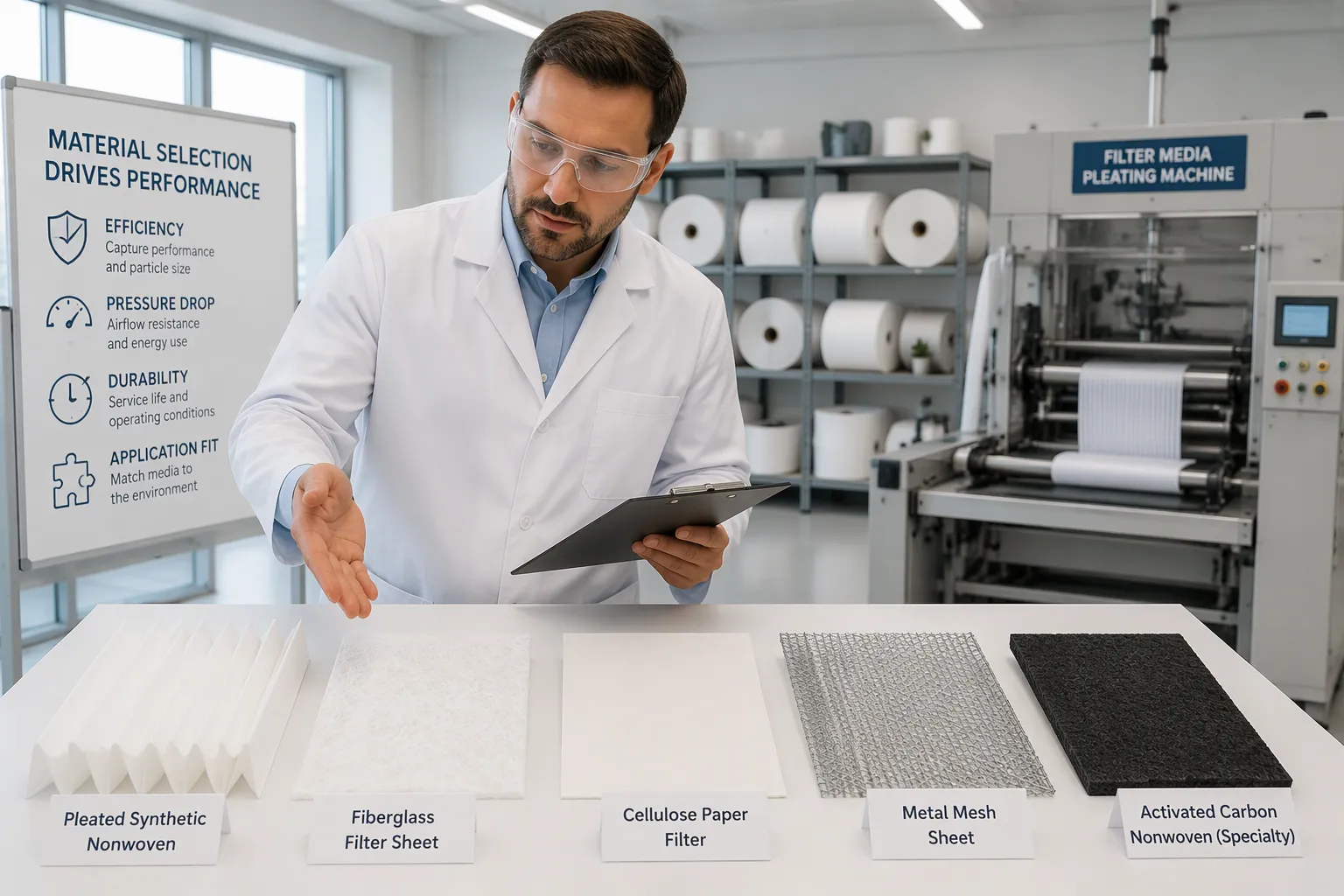
Each media category performs within a defined window. Synthetic media cover the widest range of general air and liquid filtration, and they balance cost against consistent pleat memory. Fiberglass media lead where heat and high efficiency matter, yet they demand gentle handling on the line. Cellulose and paper media serve cost-sensitive, high-volume duties in dry or lightly treated conditions. Metal mesh and sintered fiber bring durability and cleanability to harsh or high-pressure work. Specialty media such as activated carbon nonwovens and composite membranes address odor, chemical, and high-purity needs.
No category wins everywhere. A buyer who values long service life in a hot stream gains little from a low-cost paper web. A buyer who runs millions of pleats per year at a tight unit cost gains little from metal mesh. The application sets the priority, and the priority sets the media. Once temperature, efficiency, and chemical exposure are fixed, the shortlist usually narrows to two or three grades that differ mainly in cost and in how forgiving they are on the line.
Compliance and Cost
Regulatory needs vary by market and by end use. Air filters, liquid filters, and pharmaceutical filters each carry their own test and labeling expectations. Buyers should confirm the standards that apply to their target market before locking in a media grade, because a grade that satisfies one market may not carry the test data another market asks for. Air filtration is commonly graded under published guidance on air cleaners and filters, and media pore size is often characterized by bubble-point testing to a standard pore-size test method, while respirator media sits inside a separate certification regime under occupational respiratory protection rules.
CE and ISO certified manufacturing offers a useful compliance reference point, and it signals that a supplier follows documented quality systems. Certification alone does not guarantee a media grade suits a given application, so buyers should still verify test data for the specific product, and should ask whether the certificate covers the machine or the management system. The two are not the same claim.
Cost follows the same logic. Paper and standard synthetics sit at the lower end of the material cost scale. Fiberglass and high-efficiency synthetics cost more. Metal mesh and specialty composites carry the highest material cost, and they also add tooling and trial time. Buyers should weigh total cost, not unit price alone. A higher-cost media that lasts longer or cuts changeover time can cost less across the filter's service life, and a cheap web that fails at the fold costs more than the price difference ever returns.
Comparison Table Guidance
A comparison table helps buyers see the trade-offs at a glance. The table below summarizes the four dimensions that matter most during media selection, with the standards that normally apply to each category.
Table 2. Media comparison across the four selection dimensions. Standards listed are the ones normally cited for each category; confirm the exact test report for the grade you buy.
| Media Type | Technical Performance | Application Fit | Compliance Notes | Relative Cost |
|---|---|---|---|---|
| Synthetic | Good strength, stable pleat memory, fine fiber options | General air and liquid filtration | ISO 16890 (air) or ISO 3968 (hydraulic), by grade | Low to moderate |
| Fiberglass | High efficiency, high-temperature resistance, brittle | Hot process air, turbine intake, cleanrooms | ISO 29463 or ISO 16890, by grade | Moderate to high |
| Cellulose / paper | Consistent porosity, easy folding, moisture-sensitive | HVAC, panel filters, high-volume dry duties | ISO 16890; food-contact grades to FDA 21 CFR 177 | Low |
| Metal / specialty | Durable, cleanable, chemical-resistant | Harsh, high-pressure, high-purity duties | Pore size by ASTM F316; USP where required | High |
The table shows where each media type is normally used. It does not rank one option as universally superior. Buyers should treat the entries as starting points and confirm the exact grade through a sample trial, because two papers of the same basis weight can behave very differently once resin load and caliper are taken into account.
Equipment Support
Need a media-to-machine match confirmed in writing?
Share the media type, thickness, pleat height, and layer count. You will get a blade and recipe recommendation, plus the sample-trial steps needed before a production order is released.
Choosing Media and Machine
Match Media to Filtration Needs
Media selection starts with the filtration target, not the price list. A buyer should list the operating temperature, the chemical exposure, the required efficiency, and the expected service life. These four inputs narrow the field quickly. A hot exhaust stream points toward fiberglass. A cost-sensitive HVAC run points toward paper. A high-purity liquid duty points toward composite membranes.
Buyers should then weigh total cost across the filter life. A cheap web that fails early costs more than a premium grade that lasts. A premium grade on a mild duty wastes money. The application sets the priority, and the priority sets the media. Writing the four inputs down before requesting quotations also makes supplier comparisons meaningful, because every quote can then be read against the same duty.
Confirm Your Filter Pleating Machine Capability
The capability of a filter media pleating machine deserves the same scrutiny as media choice. Buyers should request sample pleating trials on the exact grade they plan to run. A trial shows how the web folds, how the pleat holds, and whether the edges stay clean. It also reveals tension behavior that no datasheet can capture, such as whether the web drifts between the guides at higher speed or whether the fold springs back after the knife releases.
Buyers should check pleat height recipes stored in the control and verify material-specific blade options before they buy. A machine that runs paper well may need different tooling for metal mesh. Confirm the maximum media width, the pleat height range, and the layer count against the intended product. Readers who want to compare the pleating station against the rest of the line can review the 1250 mm knife-type pleating configuration and check how the pleat height range lines up with the elements they intend to build.
Sample Trials and Testing
A sample trial turns assumptions into evidence. Buyers should send a roll of the actual production media, not a substitute, because a similar grade from another supplier can differ in binder, caliper, and fiber length. The trial should run at the intended line speed and pleat height. Operators then inspect the pleats for cracks, delamination, distortion, and uneven spacing.
Testing should cover the full sequence: unwinding, folding, shaping, and cutting. A grade that folds well may still cut poorly or weld weakly. Buyers should record the proven settings and store them as a recipe for repeat runs. This step protects quality across future batches and gives the production team a documented starting point. Two background references help frame the trial: how a knife pleating machine forms a fold and how media becomes a finished filter.
A filter media pleating machine handles synthetic, fiberglass, cellulose, metal, and specialty media across a wide capability range. Each category covers many grades, and each grade brings its own thickness, stiffness, and pleat behavior to the line. The category tells you where to start. The trial tells you whether the line can hold the pleat you need.
Selection should follow the application first. Efficiency targets, operating temperature, and cost shape the media choice. Sample trials then confirm that choice against real machine capability, and the recipe that comes out of the trial becomes the production standard. Readers who need a dependable filter pleating machine manufacturer can compare configurations, tooling options, and OEM/ODM support before committing to a specification.
FAQ
Can one machine really run all five media categories?
A single machine can cover all five categories when it carries the right tooling and recipes. Blade geometry, tension settings, and heat profiles change between grades, and metal mesh needs different blades from paper. Buyers should confirm each intended grade through a sample trial rather than assume universal coverage.
What pleat height range do most machines support?
A common knife-type configuration covers pleat heights from 5 to 50 mm. Tall pleats need more knife travel and steadier web support. Short pleats need faster cycling and tighter tolerance. Buyers should confirm the exact range for their intended media and pleat pattern.
How many layers can a pleating line fold at once?
A standard 1250 mm knife-type model is specified for one to three layers of paper, nonwoven, or steel mesh. Each added layer raises the force required at the fold and reduces the achievable pleat height, so buyers with multi-layer builds should ask for a trial on the actual stack rather than a single-layer demonstration.
Does fiberglass crack during pleating?
Fiberglass can crack under sharp bending or uneven tension. Independent servo-driven knives with a programmable entry angle ease the web into the fold and reduce stress points, and servo constant tension feeding prevents sudden pulls. Operators should still watch for white stress marks along the fold line, because those marks indicate fiber damage.
Can a pleating machine handle metal wire mesh?
Yes, with material-specific tooling. Standard blades can crush or distort wire mesh and close the open area the filter depends on. Blades matched to the wire diameter and mesh structure form the pleat without collapsing the weave. A sample run confirms the setup before production.
Why do specialty media need trial runs?
Every specialty grade has its own thickness, stiffness, and surface behavior. A short trial confirms the right blade angle, tension, and temperature before full production. This practice is normal across the industry, and it protects both the material and the schedule.
How fast can a pleating line run?
A servo-driven knife-type line reaches production speeds up to 150 pleats per minute. Actual speed depends on media weight, pleat height, and layer count, and heavy or multi-layer webs run slower. Buyers should set speed expectations from a trial on their own material rather than from the headline figure.
What should a buyer check before purchase?
Buyers should request sample pleating trials on the exact production media, check stored pleat height recipes, and verify material-specific blade options. They should also confirm maximum media width, pleat height range, and layer count, and ask whether the CE and ISO claims cover the machine or the quality system.
Equipment Support
Send your media sample, get a pleating recipe
Pleat height, layer count, and media grade decide the blade set and the heat curve. Share your specification and the team will return a configuration that matches the element you actually build.
Sources
Theron F., Joubert A., Le Coq L. Numerical and experimental investigations of the influence of the pleat geometry on the pressure drop and velocity field of a pleated fibrous filter. Separation and Purification Technology, 2017;182:69-77. Read the study
ASTM F316, Standard Test Methods for Pore Size Characteristics of Membrane Filters by Bubble Point and Mean Flow Pore Test. Read the test method
U.S. Environmental Protection Agency, Guide to Air Cleaners in the Home. Read the guidance
U.S. Occupational Safety and Health Administration, 29 CFR 1910.134 Respiratory Protection. Read the regulation
Machine specifications (pleating width, pleat height range, layer count, speed, temperature, power) as published on the manufacturer product pages.


